
Sweeping a prestigious international historical society award, a pair of doctoral candidates are shifting the focus of the early modern world.
Bordeaux, France — The tall windows of the Bordeaux archive building look down upon a city whose historic connection to global commerce is written in stone. Inside, the quiet of the reading room is the only sound, save for the dry whisper of old paper being turned. Here, in the heart of a structure built to hold millennia of French memory, history feels less like a narrative and more like a tactile, living force.
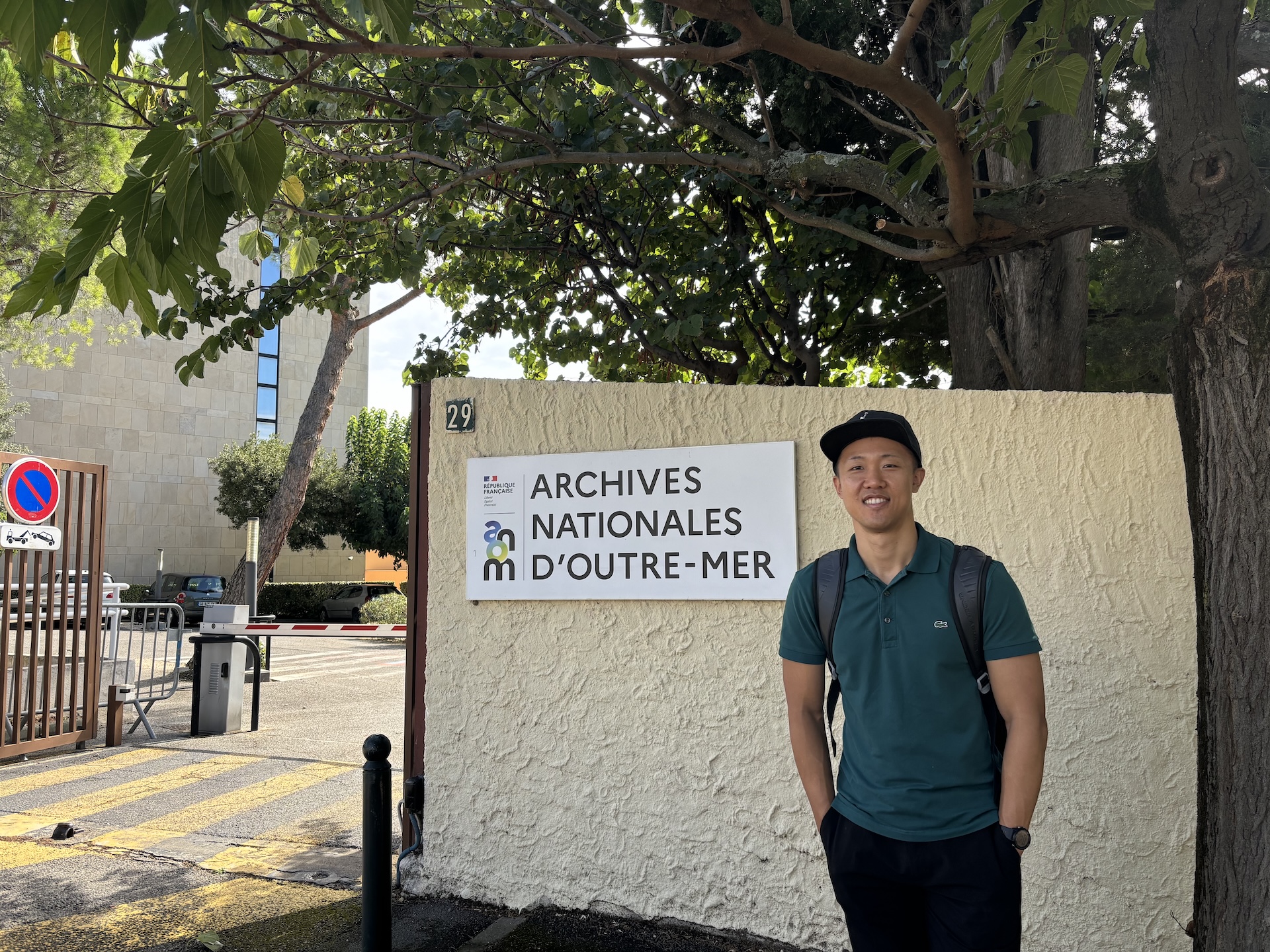
This is the global workshop for UC Santa Barbara history doctoral candidate Victoria Sharp. While she is currently poring over these specific records in Bordeaux, the archival journey of her colleague, Jungki Min, extends across the country to the Archives Nationales d'Outre-Mer in Aix-en-Provence. Their presence in these archives is no coincidence; it is the culmination of years of deep scholarly labor that has just been recognized with one of the field's highest honors.
The pair recently secured both of the Marjorie M. and Lancelot L. Farrar Awards granted this year by the Society for French Historical Studies. The memorial fund, established by the daughters of two esteemed independent scholars of European history, provides $5,000 grants to support outstanding in-progress dissertations. While UCSB scholars have won this award in the past, capturing both annual awards in a single year is an incredibly rare institutional monopoly that demonstrates the department’s distinct strength in French and Atlantic History.
Their respective projects, while geographically distinct, are unified by a profound intellectual thread. Both scholars are determined to restore historical agency to marginalized voices and to look beyond traditional centers of power.
The signature of a female empire
Sharp’s research journey began with a question about the machinery of empire and who was actually turning the gears. Her project, “Enterprising Women: Family, Commerce, and Empire in Early Modern France,” argues that women in western French port towns between 1680 and 1740 were not just observers but were instrumental architects of the French Empire.
Her initial breakthrough came while examining early notarial contracts in Brittany, a region where local laws allowed women to fully inherit, acquire and alienate property. She discovered partnership agreements where dozens of investors pooled money for ships bound for the Caribbean.
“The ship would be provisioned by a person, and captained by a person and go off to the so-called New World,” Sharp explained. “Everything that was necessary for the ship to actually make its voyage—hiring soldiers and physicians, buying medication, cannonballs and rum—was done by a woman.”
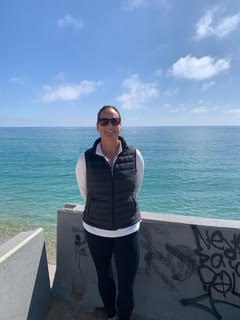
This singular find stood against a narrative that has long portrayed early modern global trade as an exclusively male space. Sharp wondered if she had simply found a lone, intrepid widow. The archives, however, began to whisper a different story. Women, even those who were married, frequently managed major trading companies while their husbands were elsewhere, sometimes even sending their sons to foreign ports like Cadiz and Seville to manage local affairs.
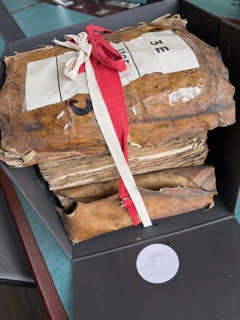
For Sharp, who is using the Farrar funding to access archives she could not otherwise visit, the records offer a profound physical connection. Handling a financial ledger where income is recorded alongside expenses reveals that these women were performing every practical business function. “Just holding the page of the person who did this is an immediate, tactile connection to somebody from 300 years ago,” she said.
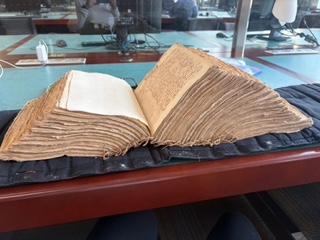
Sharp noted that reading the original documents offers an intimacy that digital copies lack. The women she studies “wrote with nice big signatures,” she observed, contrasting them with the simple markings left by illiterate sailors. Furthermore, the physical organization of the archive tells its own story. Many materials Sharp reviews were preserved by men appearing on behalf of their wives, revealing the quiet, domestic conversations that drove global economic strategies.
For Sharp, ‘place’ is paramount. “For me, it’s really grounding as well to go to the actual towns where these people lived and get a sense of the physical space, the geography, the weather and the actual building where some of these agreements were made. It gives me a more 360-degree understanding.”
The unmapped networks of a republic
Min’s research takes him to the volatile landscape of Saint-Domingue, present-day Haiti, during the 1790s and early 1800s. His dissertation, “Revolutionary Leadership: Free People of Color in Revolutionary Saint-Domingue,” looks beyond figureheads like Toussaint Louverture to map the overlooked leaders among free people of color who drove the Haitian Revolution.
Scholars have individually studied many of these figures, but Min’s insight, developed in consultation with his advisors, was to map their collective revolutionary endeavors and the dynamic nature of their shifting alliances. “Connecting them in a consistent way, while acknowledging underlying dynamics, using the narrative of network and relationship, could be something really meaningful in the scholarship,” Min explained.
By examining these inter-leadership relationships, which often crossed racial lines and depended heavily on personal ties of friendship and enmity, Min is uncovering how abstract republican ideals were articulated, contested and reworked by colonial actors. He aims to reframe French republicanism not merely as a Parisian export, but as a deeply Atlantic phenomenon.
Min’s subjects constantly framed themselves as devout, loyal Republicans, yet they were frequently accused of conspiracy by contemporary observers. By tracking these complex loyalties, Min demonstrates how fragile their political claims were, while simultaneously proving that their revolutionary endeavors were a genuine pursuit of republicanism.
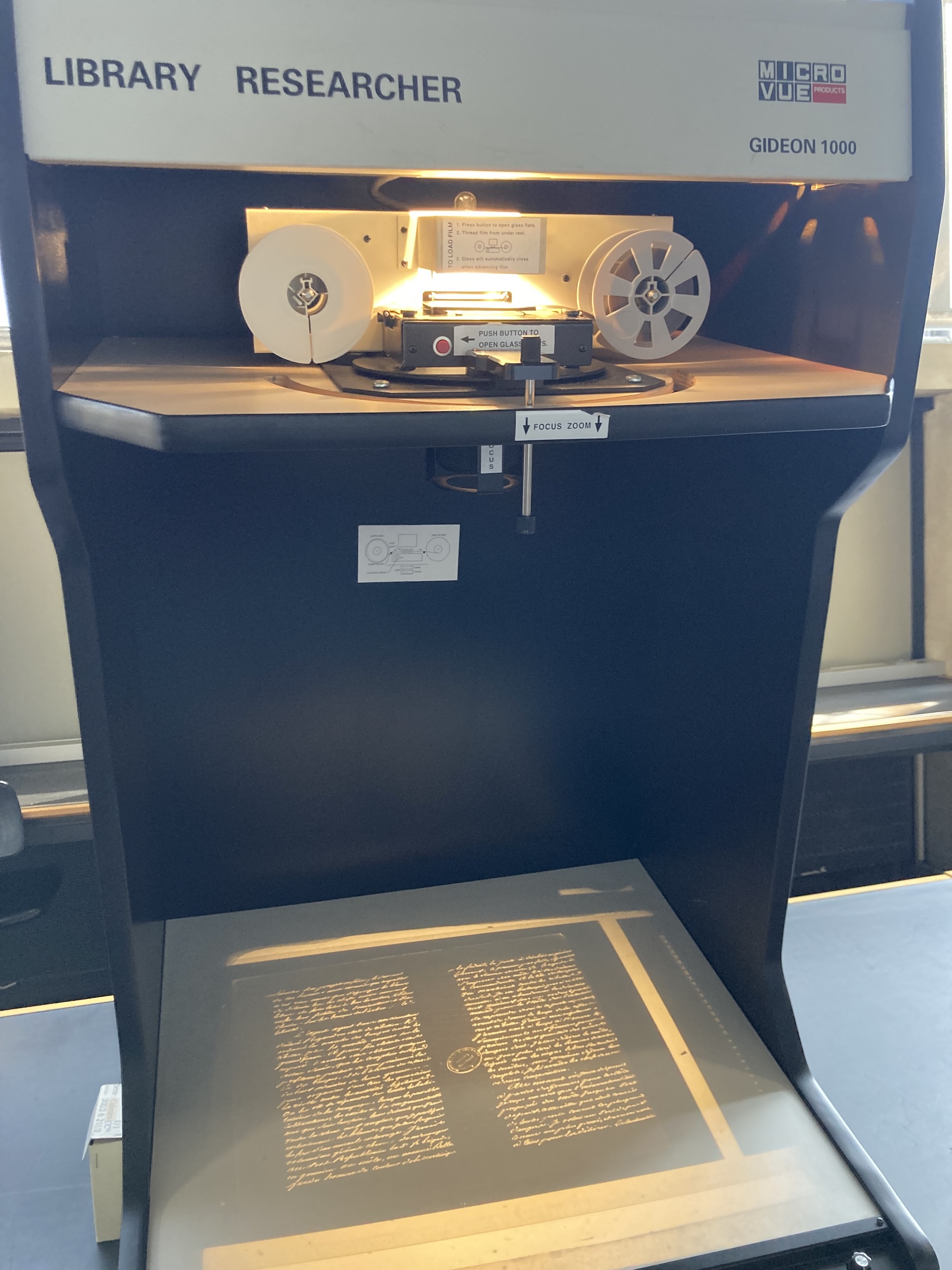
Min agreed on the vital context of physicality. “As a historian, it’s really important to have a sense of how the actual archive was made, and how they were composed and organized.” Physicality forces a deeper look. He often tells colleagues, “When you go to the archives, the archives will lead you to the right way.”
Having successfully completed the demanding physical archival research for his project, Min will utilize the Farrar Award as crucial financial support while he drafts the remaining chapters of his dissertation.
A foundation of mentorship
The shared pursuit of historical truth recently led to a serendipitous meeting. A year ago, completely unplanned, Min and Sharp bumped into each other while checking their personal belongings into the lockers at the Archives Nationales d'Outre-Mer in Aix-en-Provence. It was a visual reminder that while they work in different centuries and colonies, their academic pursuit is a shared mission.
Both scholars are quick to credit the comprehensive support of their mentors, Professor Manuel Covo and Professor Hilary Bernstein, for preparing them to compete at an international level. Min highlights Covo's ability to help him draw broader academic insights from fragmented ideas, while Sharp emphasizes Bernstein's blend of rigorous academic guidance and vital personal encouragement during the inevitable slumps of deep archival research.
It is a community effort that has paid incredible dividends. Reflecting on the conference award lunch he was able to attend with Covo, Min shared a moment of immense pride. “We were super surprised,” Min recalled with a laugh. “Two doctoral students from UCSB got the award, so we monopolized it.”