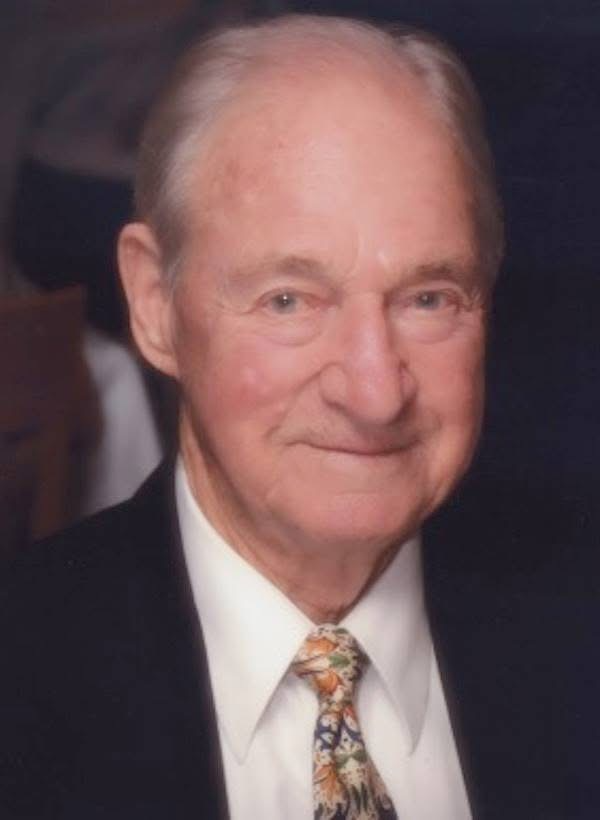
It is always a time of great sadness when we lose a member of our academic community. The Division of Humanities and Fine Arts joins the Department of History in mourning the passing of Emeritus Professor Frank J. Frost. Below is a tribute to his life and scholarship prepared by his colleagues.
— Daina Ramey Berry, Michael Douglas Dean of Humanities and Fine Arts
Born in Washington, DC and raised in Palo Alto, Frank Frost graduated from UCSB in 1955. Receiving his PhD in Ancient History from UCLA in 1961, Frank Frost joined the UCSB History Department in 1965 and taught until his retirement in 1990. His courses introduced thousands of UCSB students to the ancient Mediterranean world, especially Greece. He also played a key role in hiring UCSB’s first Roman historian, helping to build the History Department’s continuing strength in ancient history.
Frank was a noted scholar of Ancient Greek history. Much of his research focused on Athenian politics, religion, and culture in the Archaic and Classical periods (750-323 BC). His book Plutarch’s Themistocles: A Historical Commentary (Princeton 1980; revised edition 1998) is still essential reading for anyone studying the Athenian leader Themistocles (ca. 525-460 BC). The wide range of Frank’s interests is evident in articles such as “Scyllias: Diving in Antiquity” (1968) and “Ptolemy II and Halicarnassus” (1971). His introductory text, Greek Society (1971), went through five editions and was used in university courses across the United States.
Frank worked as an archaeologist in mainland Greece and on the island of Crete from the 1960s to the 1980s. He was a pioneer in Greek underwater archaeology and became co-director of Greek-American excavations at the ancient site of Phalasarna in western Crete. Frank's interest in matters maritime led him to teach a popular UCSB course on the history of seafaring.
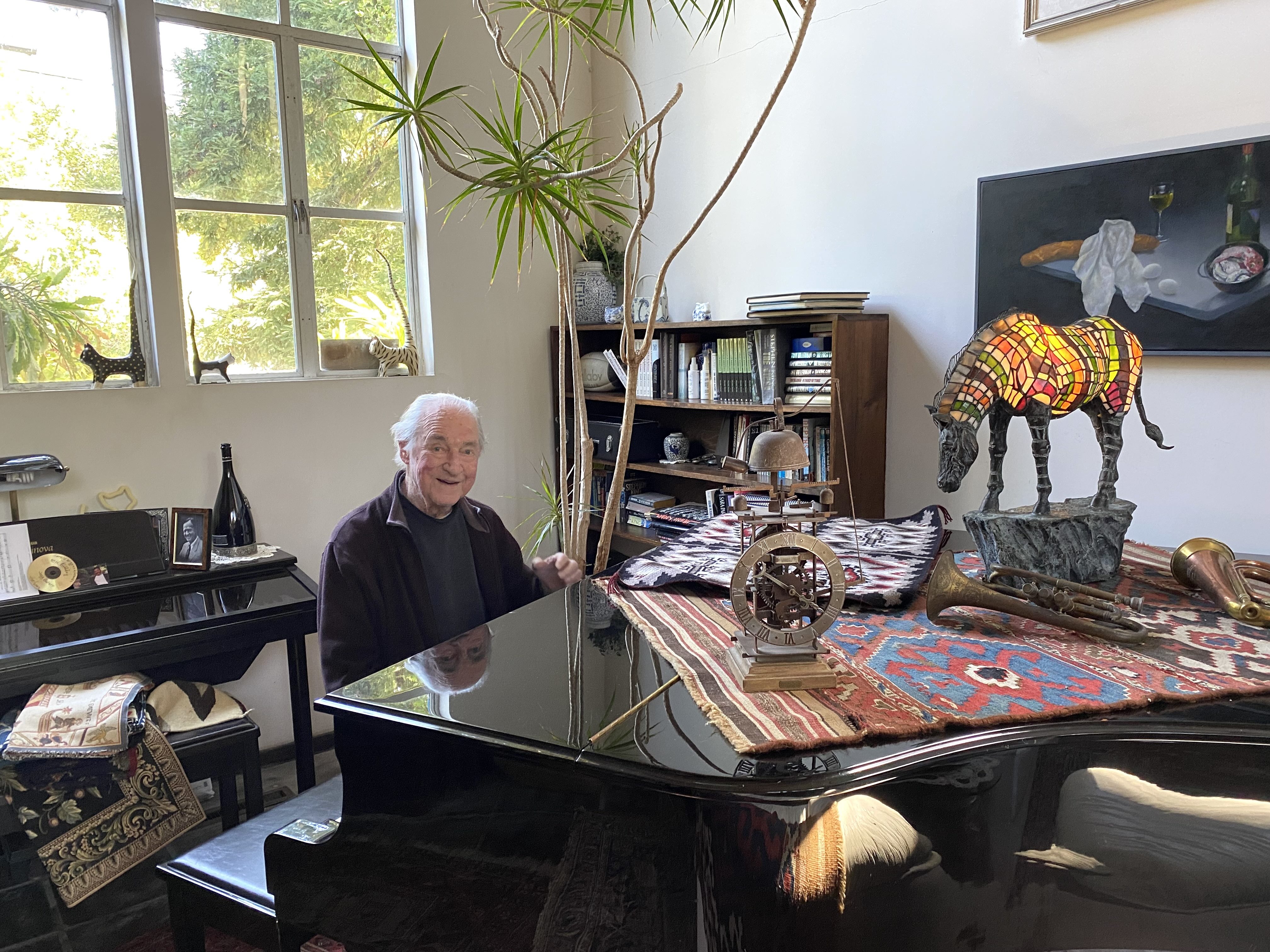
Frank Frost at the piano.
Frank was a generous supporter of UCSB Classics and History. In 1988, he endowed the Esmé Frost Fellowship in memory of his daughter Esmé, after her tragic death in an automobile accident. The Frost Fellowship has supported dozens of PhD students in the fields of Ancient Mediterranean, Medieval European, and Early Modern European history.
Even as he shifted towards writing fiction, Frank continued to publish scholarly work after his retirement. He followed up his article on “Sausage and Meat Preservation in Antiquity” (1999) with a memorable guest lecture in a new professor's UCSB Greek history class, bringing along home-made sausage and duck confit for the students to enjoy.
Academia was only part of Frank’s illustrious life. During his Army service he saw combat in Korea and witnessed atomic testing in Nevada. He was active in Santa Barbara politics and served a term on the County Board of Supervisors. A professional pianist, Frank formed a jazz trio that became a mainstay of local jazz clubs. He was a gourmet chef; meals at the house he designed and built for himself near the Mission were legendary. In retirement, he published short stories and novels.
Frank is survived by his beloved wife Amanda “Mandy” Clark Frost, his children, grandchildren, great-grandchildren, and great-great-grandchildren, and by all who knew and loved him.
A fitting closure comes from Thucydides the Athenian, who wrote twenty-four centuries ago:
“For the whole world is the sepulchre of famous men, and it is not the epitaph upon monuments set up in their own land that alone commemorates them, but also in lands not their own there abides in each breast an unwritten memorial of them, planted in the heart rather than graven on stone."
Related Links
Family Obituary (Noozhawk)
Tribute: How Frank Frost Saved More Mesa (SB Independent)
Photos courtesy of Amanda Frost and the Frost family.